
AI Is Transforming Fashion in the GCC – Why Brands Still Need an Digital Marketing Agency
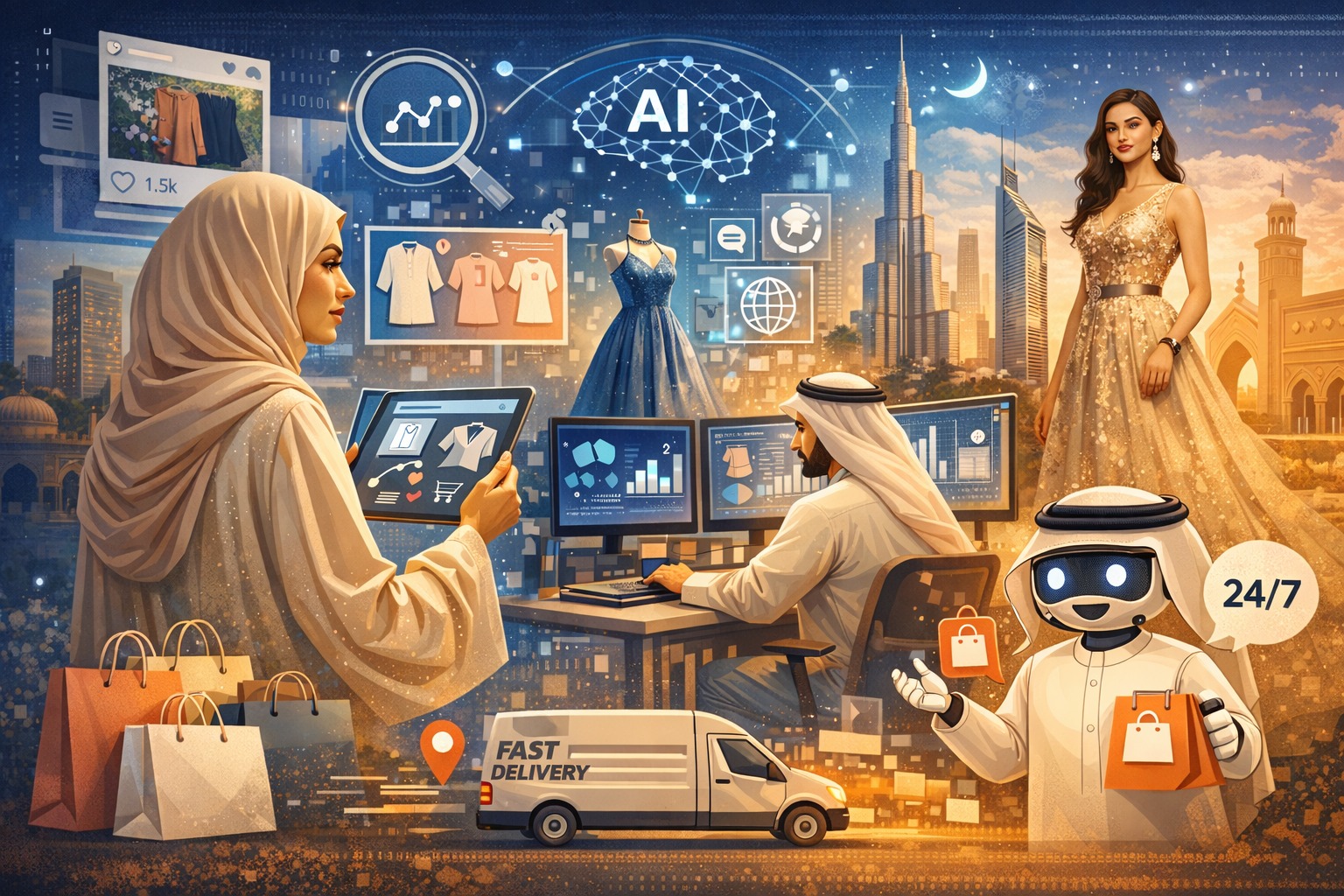
AI is changing GCC fashion at speed—shorter trend cycles, higher content demand, and shoppers expecting premium, personalized experiences in both Arabic and English. But while AI can accelerate output, it doesn’t replace brand strategy, cultural nuance, creative direction, or performance accountability. In practice, AI increases the number of decisions brands must make daily—making the right agency partner critical.
1) Trends move faster than seasonal calendars
AI helps identify emerging aesthetics from social, search, and shopping signals—especially around Ramadan/Eid, wedding season, and major sale periods.
The challenge: trend signals are easy to find; turning them into profitable campaigns is not.
Where agencies add value: translating signals into clear positioning, collections storytelling, creator collaborations, and media-ready narratives.
2) Content demand is now high-volume and bilingual
AI can generate variations quickly, but GCC audiences are sensitive to tone, modesty cues, and premium brand standards—especially for luxury and occasion wear.
The challenge: speed without consistency leads to off-brand content and weak engagement.
Where agencies add value: building always-on content systems (Arabic + English), platform-native assets, and clear creative direction that keeps the brand cohesive while scaling output.
3) Personalization is becoming the baseline
AI-driven personalization can tailor product feeds, offers, messaging, and retargeting by intent (occasion, luxury, value, essentials).
The challenge: personalization that feels generic—or culturally mismatched—reduces trust and conversion.
Where agencies add value: mapping customer journeys, defining segmentation, and crafting messaging frameworks that feel premium, relevant, and local.
4) Performance marketing is shifting from “more ads” to “smarter testing”
AI makes it easier to produce more creatives. The advantage comes from choosing the right tests, interpreting results correctly, and scaling winners without harming brand equity.
The challenge: brands often run volume without learning, causing creative fatigue and unstable performance.
Where agencies add value: structured experimentation, creative analytics, and scaling playbooks across Meta, TikTok, Snapchat, Google, and marketplaces.
5) Marketing must align with inventory and fulfillment expectations
In the GCC, delivery speed expectations are high, and stock availability can differ by market (e.g., KSA vs UAE). AI can support forecasting, but campaigns still need tight coordination.
The challenge: pushing “hero” products that go out of stock (or have long delivery windows) wastes spend and damages experience.
Where agencies add value: aligning media and messaging to what’s in stock, what’s profitable, and what can be delivered quickly—especially during peaks.
6) Governance matters more with AI
AI increases speed, but also risk: inconsistent brand voice, questionable claims, and visuals that don’t meet cultural or platform standards.
The challenge: one misstep can cost trust.
Where agencies add value: guardrails, approval workflows, and brand-safe content production that keeps teams fast and compliant.
How Digital Impressions UAE Helps Fashion Brands Navigate AI-Driven Change
Digital Impressions UAE helps fashion and lifestyle brands use AI as a growth enabler—without losing brand consistency or cultural relevance. We support teams across strategy, creative, and performance so AI-driven scale translates into measurable results.
How we help (mapped to the challenges above):
- Trend-to-campaign execution: turning fast-moving GCC signals into launch narratives, content themes, and conversion-focused media plans.
- Bilingual content at scale: Arabic/English copy, creatives, and rapid asset versioning tailored to GCC audiences and platforms.
- Personalization that feels premium: segmented messaging frameworks and journey-based campaigns for occasion, luxury, value, and essentials shoppers.
- Testing and optimization discipline: structured creative testing, insight-led iteration, and scaling frameworks to reduce fatigue and stabilize CPA/ROAS.
- Media aligned to stock + margin: campaign prioritization around availability, delivery promise, and profitability—especially during Ramadan/Eid and sales.
- Brand-safe AI workflows: practical guardrails so speed doesn’t compromise quality, compliance, or customer trust.
FAQ’s
1) Will AI replace fashion marketing teams or agencies?
No. AI speeds up production and analysis, but it doesn’t own brand strategy, cultural judgment, creative direction, or performance accountability. It increases output and complexity—making expert execution more important.
2) What’s the biggest AI mistake fashion brands make in the GCC?
Treating AI like a shortcut for content volume. Without strong direction and bilingual cultural nuance, the output becomes generic, inconsistent, or misaligned with audience expectations.
3) How does AI change paid social for fashion in the GCC?
It increases the need for frequent creative refresh, smarter segmentation, and structured testing. Winning comes from rapid iteration and learning—not just generating more ads.
4) Why is bilingual (Arabic + English) strategy critical with AI?
Because direct translation often fails for tone, luxury positioning, and cultural context. AI can assist, but human-led localization ensures the messaging lands correctly and protects brand perception.
5) How can brands reduce wasted spend when trends shift fast?
By connecting campaigns to real-time performance signals and ensuring promoted products have stock depth and reliable delivery timelines—especially during peak periods.
6) Does Digital Impressions UAE have in-house team?
Yes. We have a complete Development, Marketing and operations team so we can move faster with better control.
7) What results should brands expect from a stronger AI + agency approach?
More relevant campaigns, faster creative cycles, improved conversion through better personalization, reduced creative fatigue, and more efficient spend through smarter testing and stock-aware media planning.
8) Which channels matter most for GCC fashion right now?
Usually a mix of Meta, TikTok, Snapchat, and Google—often supported by creators and marketplace visibility depending on category and price point. Channel mix should be driven by audience intent and product type, not trends alone.
You might also like





Let’s chat...
AS SEEN ON









awards

Excellence
in Digital Marketing
Women CPO
of the year 2023
Transformational
Leaders to Watch
Most Trusted
Companies


-

INDIA
NCR
+91-9811348433 Digital Impressions (INDIA)
29-36 LGF, Charmwood Plaza,
Delhi NCR - 121009
India
-

INDIA
NEW DELHI
+91-9811348433 Digital Impressions (INDIA)
B1/A19, 2nd Floor, Mohan Cooperative,
New Delhi - 110044
India
-

USA
ATLANTA, GEORGIA
+1-7702501515 Digital Impressions (USA)
1445 Woodmont Ln NW,
4515 Atlanta Georgia - 30318
United States
-

UAE
DUBAI, UAE
+971-545502300 Digital Impressions FZCO
72819, IFZA Business Park, A1
Dubai Silicon Oasis - 342001
UAE


