
How to Localize a Fashion Store for UAE: Arabic UX, Pricing, Sizing, Influencers, and Cultural Fit
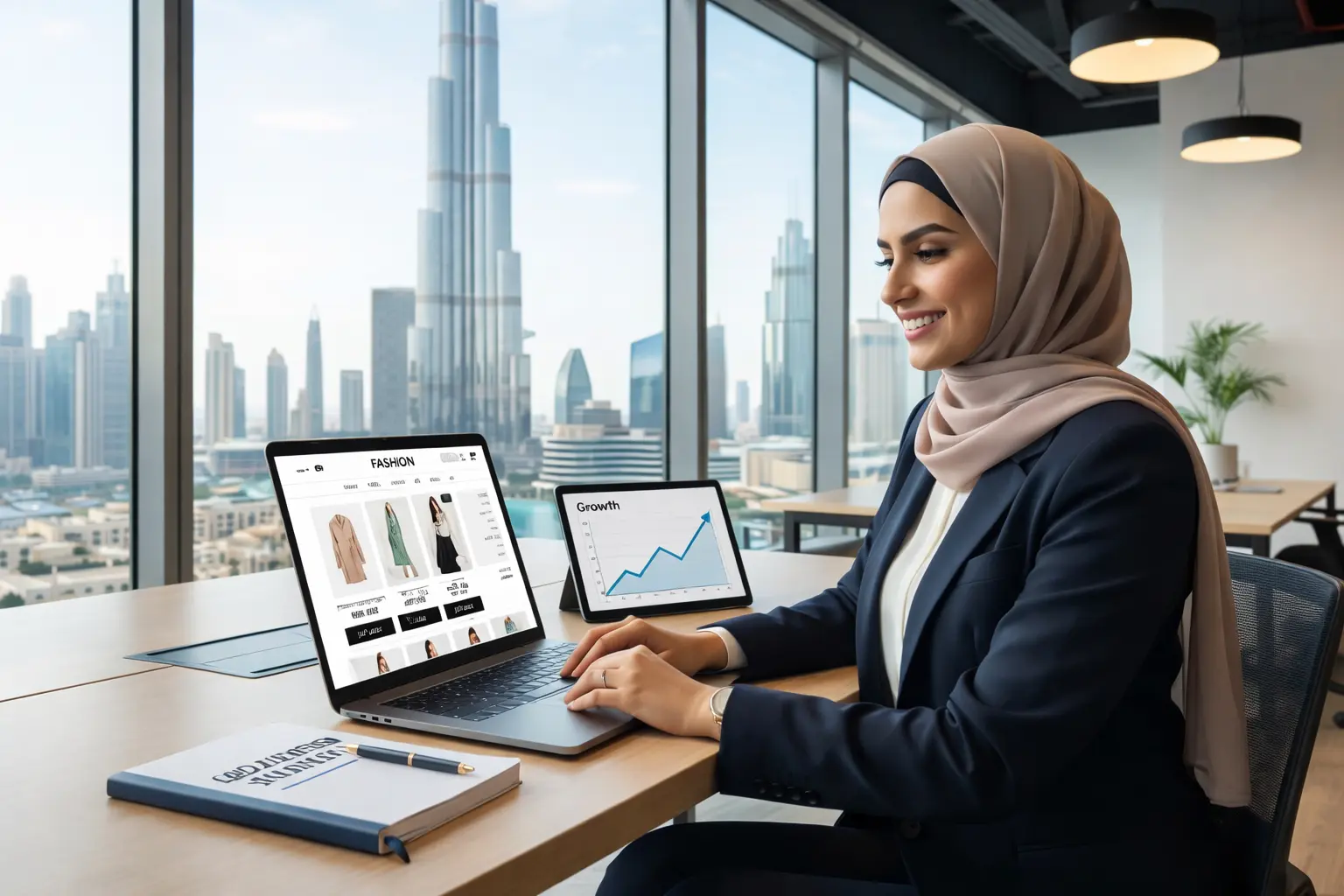
Selling in UAE through fashion is not simply about advertising or listing of products, but rather brands that succeed do so by sounding ‘local’. Additionally, it is important for brands selling in UAE to localize their pricing, size, delivery, language and branding to sound familiar to the target market, while also tailoring the overall approach to online buyers. The following guide will assist you in localizing your approach and understanding how agencies, such as Digital Impressions UAE, would typically implement this process.
1) Arabic UX – Make it Simple. Not Just Translated
Arabic support is an indication of trust for mobile-first customers in UAE. Examples of items to localize in addition to language are:
- RTL Layout (Right to Left): Ensure that filtering and checkout of products work properly in RTL
- Arabic Naming of Products: Use standard Arabic Terms – not weird Literal Translations
- Search and Filters in Arabic: Many online retailers do not provide Arabic Search capability which has a negative impact on conversions.
- Arabic Customer Support Touchpoints: What’s App, FAQ’s, Return Policy, Shipping Information
Quick win: Always keep a Language Switcher visible and remember the User Preference.
2) UAE Pricing – Currency, Psychology and Trust
Pricing in UAE is more than simply displaying the AED price (this includes clarity and confidence) therefore:
- Default display of prices in AED.
- Be Transparent Regarding VAT & Delivery Fees (Surprise delivery fees will kill the checkout conversion rate).
- Use Local-Friendly Price Points (for Example: AED 99, 149, 199) that are in line with your Brand Positioning
- It is important to properly highlight limited time promotions and offers to the best of your ability while also being careful to avoid using excessive discounts as these can damage your brand image.
Quick win: Place a “Delivered to UAE” and an Estimated Delivery Date in your product page.
3) Improve Guidance on Sizing for UAE and Reduce Returns
Sizing issues account for a high volume of returns and subsequent loss of revenue for fashion retailers.
Sizing in the UAE:
- Prioritize providing conversions between US/UK/EU sizing for products, as there are many UAE customers who utilize different sizing systems.
- Include a size guide on the product detail pages for each product type (e.g., abaya vs. dress vs. jeans).
- Include the height/size of the models shown in photos of the products with descriptions.
- Provide fit notes that are regionally appropriate to help customers choose a product (e.g., “relaxed fit”, “modest coverage”, “runs small”).
Quick win: Include either “Runs small/True to size/Runs Large” on the product detail pages based on customer reviews and feedback data.
4) Users in the UAE Prefer to Discover Fashion Through Influencers- Relevance is More Important Than Follower Count
Fashion discovery is driven largely by social media influencers in the UAE, however, the most productive results are generally found when a brand partners with the most relevant influencer rather than the influencer with the largest following.
Selecting Influencers:
- Identify influencers based on their followers’ geographical locations (UAE only) versus global followers.
- Identify influencers based on the style of their audience (modest fashion, streetwear, luxury fashion, casual clothing, etc.).
- Evaluate influencers using data from saves, shares, and responses to stories in addition to likes.
- Combine micro-influencers (which usually have a much higher level of trust) with a few mid-level influencers to build reach for your brand.
Many brands have executed campaigns in which they have invested a significant amount of money into a single large influencer to post for them. However, they did not engage in retargeting or follow the influencer’s success.
When considering a localized fashion approach for the UAE (United Arab Emirates), it is essential to respect the cultural and personal preferences while still representing your brand’s identity as well as possible.
There are some practical steps to take:
- Create modest style options, i.e., layering, longer lengths, and higher necklines (also appropriate for multiple occasions).
- Create more inclusive visuals, including images of models of different ethnicities and females wearing modest-style clothing.
- Plan and create seasonal moments, for example:
- Collections intended for Ramadan and Eid such as gifting products with a gift box or packaging.
- National Day campaigns such as images of national symbols in a tasteful way rather than in a gimmicky manner.
- Summer merchandise that is created from appropriate fabrics and is breathable.
A quick win would be to create a separate collection page for “Modest Editors” or a compilation of collections that reflect “UAE” brands and styles.
Checklist we at Digital Impressions UAE uses:
we typically look at the localization in three layers.
1) Website-Store Engagement (Conversions)
- Our Arabic UX and RTL Quality Assurance.
- Our website’s local shipping/returns message strategy.
- Our website’s payment options.
- Our website’s sizing options and size chart.
2) Demand Generation (Traffic)
- Our Website Using UAE-Focused SEO (Both Arabic/Eglish).
- Our Website Social Media Strategy for the UAE.
- Influencer Shortlisting and On-Going Monitoring
3) Performance Marketing (Sales)
- The UAE is broken into Campaigns based on Emirate/Audience Segments.
- We offer multiple marketing retargeting strategies based on customer interactions on our digital properties: Viewed Products, Added to Cart, Engaged on IG/TikTok.
- We use Influencer-Style UGC for Creative Testing.
FAQ’s
1) Are we required to have a completely Arabic language website or can it be partially Arabic
A. Fully localized Arabic experience (including checkout and Right To Left format) typically provides a higher conversion and trust factor – especially on mobile phones than providing partial Arabic.
2) What is the fastest localization change that will improve sales in the UAE?
A. Typically, clear AED prices with expected Delivery timelines and Return procedures will decrease hesitation immediately.
3) Should we engage with micro-influencers or larger creators in the UAE?
A. In general, Fashion Brands have the most success with both Micro-influencers for Trust/Conversion and Mid-tier creators for Reach. The goal is to create a formalized trackable plan versus relying on “one off” posts.
4) How can we avoid higher return rates based on sizing?
A. By employing size conversions, Model information, Fit Notes, SKU-specific Size Guides and tracking returns by SKU for patterns in returns.
5) Can we leverage the same ads we use in other markets within the UAE?
A. You could start with that, but based on historical performance within the UAE, Creatives perform best when they:
- Reflect local styling preferences
- Incorporate UAE-specific Promotions and delivery expectations
- Include formats that have been successful (Influencer/UGC) from Instagram and TikTok.
Q6) How long does it typically take an agency to localize?
A. Most agencies implement a localization rollout similar to:
- Week 1-2: UX, clarity on AED pricing, Test size guides, & Key URL pages
- Week 3-4: Develop influencer content pipeline; execute influencer campaigns & Retarget.
You might also like


How to Scale Paid Ads Without Destroying Profit Margins
Why Fashion Brands in the UAE Need Expert Help to Scale Online


Let’s chat...
AS SEEN ON









awards

Excellence
in Digital Marketing
Women CPO
of the year 2023
Transformational
Leaders to Watch
Most Trusted
Companies


-

INDIA
NCR
+91-9811348433 Digital Impressions (INDIA)
29-36 LGF, Charmwood Plaza,
Delhi NCR - 121009
India
-

INDIA
GURUGRAM
+91-9811348433 Digital Impressions (INDIA)
4th Floor, JMD MEGAPOLIS, FF-402,
Badshahpur Sohna Rd, Sector 48,
Gurugram, Haryana 122018
India
-

USA
ATLANTA, GEORGIA
+1-7702501515 Digital Impressions (USA)
1445 Woodmont Ln NW,
4515 Atlanta Georgia - 30318
United States
-

UAE
DUBAI, UAE
+971-545502300 Digital Impressions (FZCO)
72819, IFZA Business Park, A1
Dubai Silicon Oasis - 342001
UAE


