
The AI-Powered Customer Journey: Connecting Ads, Storefronts, and Sales for the Modern D2C Era
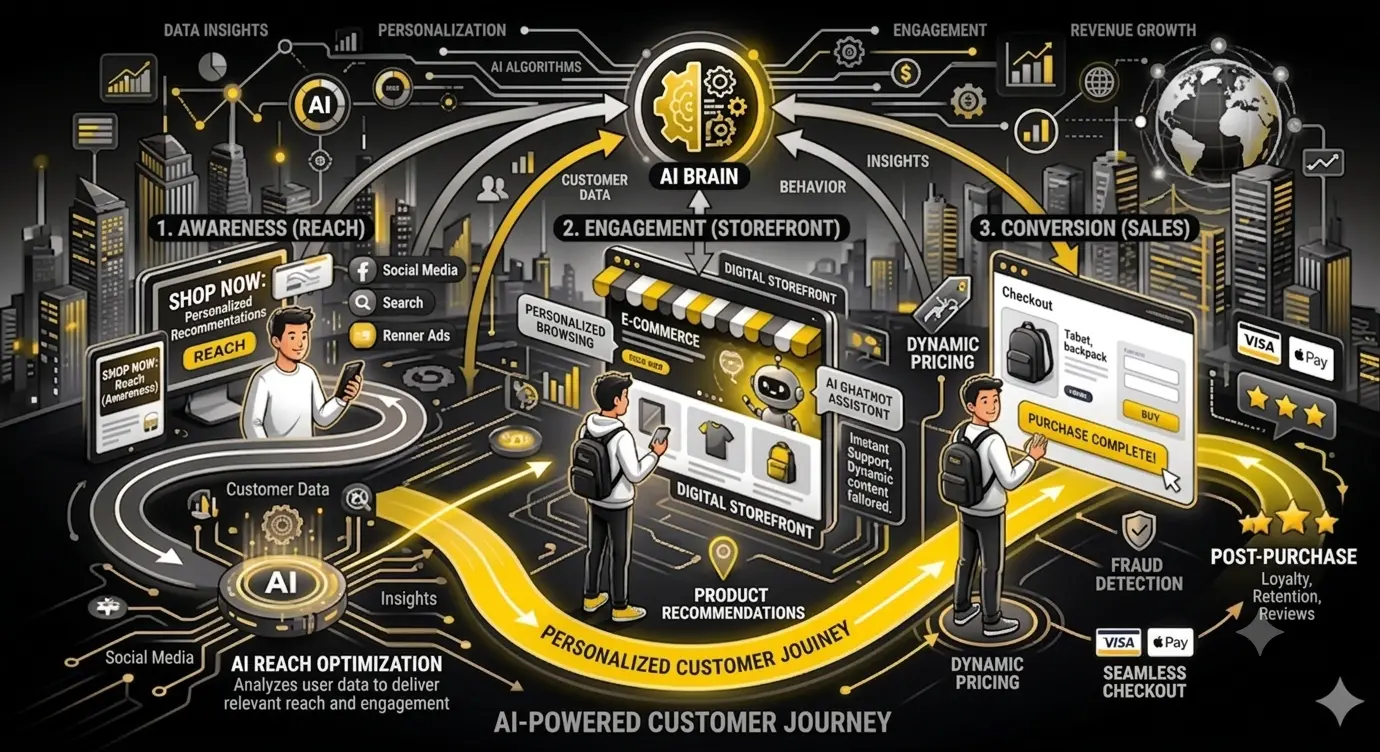
The linear sales funnel is dead.
If you trace the path of a modern consumer, you will not find a clean, predictable line. You will find a tangled web. A buyer does not simply see an ad, click a link, and complete a transaction. Instead, they might discover a brand while scrolling through a social media feed on their phone during a morning commute, browse a specific collection page, leave to compare alternatives on a third-party marketplace, return via an organic search query days later, interact with an automated chat helper, and finally complete the purchase two weeks later on a desktop device.
For years, brands approached this complexity by building bigger silos. Advertising teams focused on lower cost-per-click (CPC). Website development teams optimised static page speeds. Retention teams blasted automated, batch-and-blast email newsletters. The result was a fragmented digital ecosystem where the right hand rarely knew what the left hand was doing.
Today, artificial intelligence is completely dismantling these boundaries. The AI-Powered Customer Journey is reshaping how scaling businesses understand and manage consumer intent. By connecting previously disconnected touchpoints into a unified, fluid customer experience, AI allows brands to achieve what was once impossible: absolute operational visibility from the very first impression to the final post-purchase interaction.
At Digital Impressions (DI), we treat this cross-channel unity as our core mandate. We don’t build isolated marketing campaigns; we engineer connected digital ecosystems that turn fragmented data into continuous, predictable revenue growth across regional hubs in Delhi NCR, Dubai, and global markets.
1. The Death of Fragmented Marketing: Embracing the Connected Lifecycle
Traditionally, corporate marketing operations functioned like independent islands. The advertising team measured ad relevance scores and traffic volume, yet they lacked deep insight into how that traffic actually behaved once it hit a complex Shopify backend. Simultaneously, conversion rate optimisation (CRO) teams tracked drop-off rates on collection pages without fully understanding which specific ad creative generated that exact traffic cohort.
AI has permanently ended this era of isolated analytics. By integrating machine learning algorithms directly across data layers from performance marketing pixels to the core e-commerce infrastructure, businesses can finally assemble a complete, multi-dimensional picture of customer behaviour.
| Operational Paradigm | Data Integration Level | Core Focus & Visibility |
|---|---|---|
| Old Fragmented Model | Siloed Platforms & Independent Channel Tracking | Paid Ads teams track clicks only; Web Dev monitors raw page hits; Sales/CRM logs closed orders entirely separately without multi-touch attribution context. |
| Modern Connected AI Model | Unified Real-Time Cross-Channel Data Layer | Deep visibility into how users discover the brand, what exact content components impact evaluation, where drop-offs occur, and cross-channel conversion path optimisation. |
When you connect these data streams, your decision-making instantly becomes smarter. You gain precise visibility into exactly how customers discover your brand, what specific educational content influences their purchasing decisions, which combined touchpoints drive the final conversion, and precisely where users lose interest and drop off. You no longer guess which half of your marketing budget is working; the data tells you explicitly.
2. The Strategic Pillars of an AI-Driven Customer Blueprint
Managing a connected customer journey requires transforming every digital asset you own, from your external campaigns to your internal storefront scripts, into a responsive, intelligent organism. At Digital Impressions, we break this down into five core pillars.
A. Smarter Customer Acquisition & Predictive Targeting
The era of blasting broad demographic buckets with a performance budget is gone. Modern acquisition relies on identifying deep, behavioural patterns that human analysts simply cannot spot in raw spreadsheets. AI shifts acquisition from a reactive game to a predictive science. By processing thousands of data points, ranging from micro-interactions on social ads to past transactional histories, machine learning algorithms construct highly precise lookalike models based on actual customer lifetime value (LTV).
- Audience Prediction: Identifying high-value cohorts long before they complete a transaction.
- Campaign & Budget Optimisation: Dynamically shifting performance spend in real time toward platforms and creative assets demonstrating the highest conversion potential.
- Conversion Forecasting: Utilising early traffic behaviour to accurately predict revenue pipelines weeks in advance.
Instead of spending more to capture attention, your acquisition engine becomes structurally more efficient over time, lowering customer acquisition costs (CAC) while scaling your volume.
B. Hyper-Personalised Website Experiences
Driving high-intent traffic to a static, one-size-fits-all storefront is a recipe for high bounce rates. Once a visitor lands on your website, AI takes over to tailor the entire environment based on real-time context and historical behaviour.
Imagine two distinct buyers arriving at a premium lifestyle storefront simultaneously:
Scenario 1: The High-AOV Luxury Shopper
Profile: Arrives via an ad highlighting premium, customised linen textile collections.
AI Adaptation: The storefront dynamically restructures the home page layout to feature artisanal collections, alters the hero messaging to reflect craftsmanship, and surfaces high-ticket product recommendations.
Scenario 2: The Functional, Swift Buyer
Profile: Arrives searching for an emergency home appliance replacement.
AI Adaptation: The storefront instantly surfaces concrete technical specifications, displays real-time stock availability at the nearest local warehouse, and highlights a prominent, single-tap “Buy Now” checkout action.
By dynamically altering landing pages, calls to action, and content pathways, your storefront shifts to match the exact mental state of the individual buyer, maximising the immediate probability of a conversion.
C. Intelligent, Behaviour-Driven Lead Nurturing
When an e-commerce visitor leaves a website without purchasing, standard remarketing models blast them with repetitive banner ads featuring the exact item they just looked at. This raw approach quickly creates ad fatigue. AI elevates nurturing by treating prospects as unique individuals rather than generic email lists. Through deep intent tracking and real-time engagement scoring, automated nurturing workflows adapt instantly:
- Behaviour-Based Email Journeys: If a user spends ten minutes reading an authoritative guide on high-end appliance maintenance, the system triggers tailored educational emails regarding build quality rather than basic discount codes.
- Dynamic Cross-Channel Remarketing: Ad creative changes automatically based on whether the user is interacting with your mobile app, reading an email, or browsing external networks.
- Engagement Prioritisation: Identifying exactly when a prospect’s intent has peaked, triggering timely, high-impact incentives precisely when they are most likely to convert.
D. Empowering Sales & Operations with Deep Behavioural Insights
For premium consumer brands, B2B wholesale channels, or consultative luxury sectors, final conversions often require direct human interaction, whether that involves an outbound customer support team concluding a high-value order or an operations desk coordinating enterprise delivery.
AI strips away the guesswork for these customer-facing teams. Before a representative ever hops on a call or opens a chat window, AI populates their dashboard with a comprehensive behavioural cheat sheet:
- High-Intent Flagging: Highlighting prospects who are actively showing strong purchase readiness signals.
- Historical Engagement Maps: Reviewing every article read, video viewed, and product colour variant clicked over the past thirty days.
- Predictive Objection Handling: Analysing user paths to anticipate potential hesitation points, such as shipping timelines or technical compatibility, allowing your team to deliver relevant, proactive solutions instantly.
3. The DI Engineering Approach: Bridging Ads, Shopify, and CRM Analytics
At Digital Impressions, we do not view these AI capabilities as standalone software plugins. You cannot simply install a handful of disconnected applications onto a store backend and expect an integrated customer journey. True omnichannel synchronisation requires meticulous, full-stack architectural engineering.
Here is how our development and marketing teams build this connected infrastructure for our clients:
- Data Layer Synchronisation: We build unified tracking protocols that pass clean data seamlessly between performance platforms (Meta, Google, TikTok), the e-commerce engine (Shopify Plus), and downstream customer relationship management (CRM) platforms (Klaviyo, Salesforce). By utilising advanced Server-Side API tracking rather than relying solely on fragile browser cookies, we ensure your attribution data remains intact despite modern privacy constraints.
- Topical Content Clustering: We align your SEO structure perfectly with your advertising funnels. If our performance media team uncovers a highly profitable search angle in our paid search campaigns, our development and SEO teams immediately construct dedicated, schema-rich content hubs to capture that exact query flow organically, capturing the user at every stage of their research lifecycle.
THE DIGITAL IMPRESSIONS MARTECH INTEGRATION STACK
======================================================
1. ATTRIBUTION LAYER –> Server-Side Conversions API & Custom Edge Tagging
2. COMMERCE ENGINE –> Headless or Highly Optimised Shopify Plus Core
3. PERSONALIZATION –> AI-Driven Product Recommendations & Adaptive Blocks
4. CRM & AUTOMATION –> Deep-Flow Intent-Based Dynamic Lifecycle Triggers
4. Advanced Performance Measurement: Tracking the True Valuation of Revenue
If your current marketing team is still evaluating success by looking at isolated channel metrics like basic click counts or simple website visitor tallies, you are operating in the past. To scale a modern brand efficiently, your measurement framework must look at the complete financial ecosystem.
Digital Impressions builds multi-touch, holistic measurement models that systematically answer the most difficult questions in digital commerce:
- Attribution Contribution: Which top-of-funnel awareness campaigns actually set up the conversion that occurred via a direct visit three weeks later?
- Micro-Conversion Mapping: Which specific informational pages or product comparison tools are most effective at keeping a user moving forward in their journey rather than dropping out?
- Channel Valuation: Which digital marketing channels yield the highest ratio of returning visitors and long-term customer lifetime value (LTV), rather than just single, low-margin transactions?
We shift your organisational KPIs away from vanity marketing metrics and directly toward bottom-line health: Customer Acquisition Cost Efficiency, Margin Health, and Verified Contribution to Revenue.
5. Shifting from Campaigns to Lifecycles: The Path to Absolute Brand Advocacy
Sustainable growth is never achieved by executing a series of disconnected, short-term promotional campaigns. The brands that dominate their sectors focus heavily on building unified, continuous consumer experiences that guide an individual flawlessly across five core evolutionary phases:
Awareness → Engagement → Conversion → Retention → Advocacy
AI acts as the primary nervous system for this entire path. It ensures that when a customer transitions from a prospect to a buyer, their treatment changes immediately. Their transactional emails feel as personalised as their initial discovery ad. Their loyalty rewards update dynamically based on their actual engagement levels. Their customer support interactions feel continuous because the representative already possesses their full brand history.
Future-Proofing Your Brand: Efficiency Over Pure Spend
Winning the modern e-commerce landscape is no longer a question of who has the largest advertising budget to burn. The market belongs to the brands that understand their consumers deeply and possess the technical infrastructure to build completely friction-free, connected digital experiences.
When your advertisements communicate fluidly with your storefront, and your storefront passes perfect behavioural data directly to your retention and sales teams, your entire operation becomes incredibly resilient. You protect your margins, capture hidden demand, and turn casual browsers into lifetime brand advocates.
Let Digital Impressions transform your fragmented marketing channels into a singular, highly intelligent revenue engine.
You might also like
The Impressions Edit – September ’26
Expert Insights: How AI Is Changing E-commerce Marketing
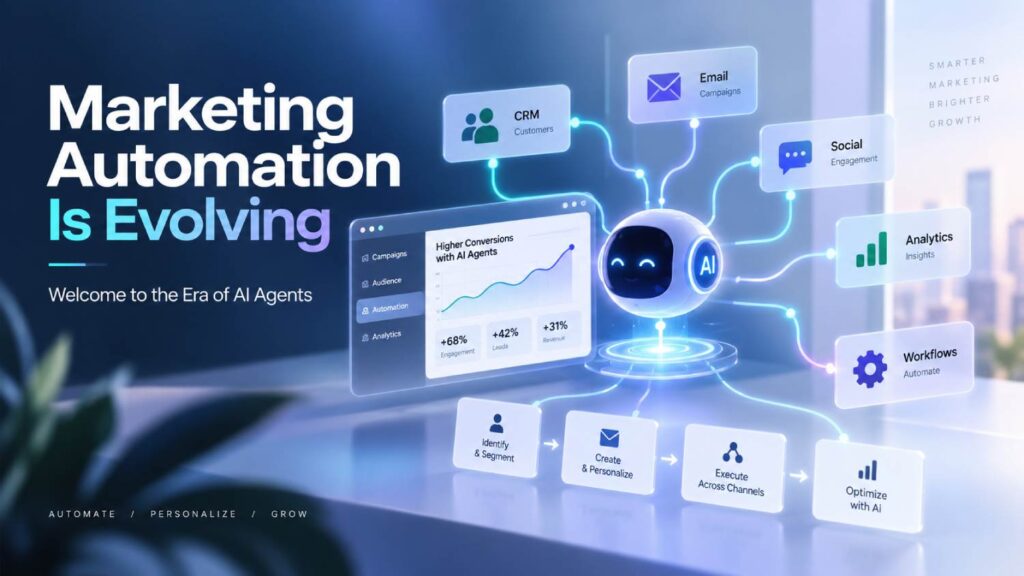
Marketing Automation Is Evolving: Welcome to the Era of AI Agents


Let’s chat...
AS SEEN ON









awards

Excellence
in Digital Marketing
Women CPO
of the year 2023
Transformational
Leaders to Watch
Most Trusted
Companies


-

INDIA
NCR
+91-9811348433 Digital Impressions (INDIA)
29-36 LGF, Charmwood Plaza,
Delhi NCR - 121009
India
-

INDIA
GURUGRAM
+91-9811348433 Digital Impressions (INDIA)
4th Floor, JMD MEGAPOLIS, FF-402,
Badshahpur Sohna Rd, Sector 48,
Gurugram, Haryana 122018
India
-

USA
ATLANTA, GEORGIA
Digital Impressions (USA)
1445 Woodmont Ln NW,
4515 Atlanta Georgia - 30318
United States
-

UAE
DUBAI, UAE
+971-545502300 Digital Impressions (FZCO)
72819, IFZA Business Park, A1
Dubai Silicon Oasis - 342001
UAE


