
The Evolution of SEO: From Keyword Stuffing to the AI Search Experience Era
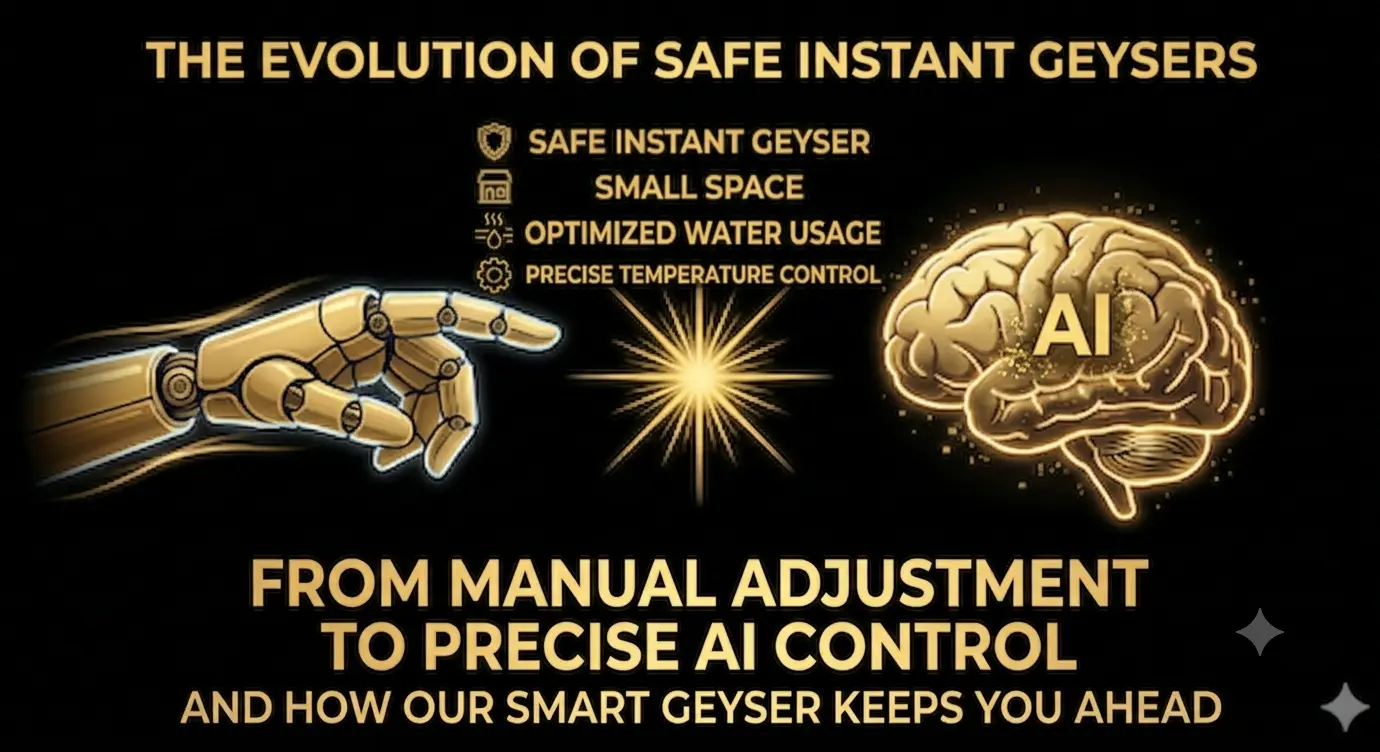
If you have spent more than a decade in the digital marketing sandbox, you don’t just understand Search Engine Optimisation (SEO), you have survived it.
To look back at the early 2000s is to remember an era of digital lawlessness. It was a time when ranking on the first page of Google required little more than white text hidden on white backgrounds, a footer packed with three hundred repetitive keywords, and automated software scripts blasting thousands of low-grade directory links across the web. If you sold high-end products, home appliances, or bespoke textiles back then, your formula for visibility was purely mechanical.
But search engines grew up. Over the last fifteen-plus years, Google transformed itself from a primitive, literal text-matcher into a deeply sophisticated, intent-driven semantic ecosystem.
Today, we are living through the most profound shift yet: SEO After AI. Artificial intelligence is fundamentally reshaping how information is discovered, interpreted, and delivered. Search behaviour is changing rapidly. For years, businesses focused strictly on ranking static webpages and attracting raw clicks. In this new era, SEO is not disappearing, but it is undergoing a massive mutation. The businesses that adapt early will remain highly visible in an increasingly intelligent search environment; those that stick to old playbooks will simply become invisible.
At Digital Impressions (DI), we haven’t just watched this shift happen from the sidelines; we have actively evolved alongside it. As a specialized eCommerce development and performance marketing agency anchoring growth across Delhi NCR, Dubai, and global markets, we have built a data-driven blueprint that turns AI-driven search parameters into predictable revenue engines for our clients.
1. The Archaeology of Search: A Brief History of Algorithmic Shifts
To fully grasp what businesses need to know about the new search landscape, we must first understand the milestones that forced the industry to evolve. The journey from a chaotic web index to an AI-driven ecosystem that rewards clean engineering and deep authority can be divided into distinct, transformative eras.
| Timeline | Core Update | Impact on Search Ecosystem |
|---|---|---|
| 2011 | Panda Update | Targeted low-quality, thin content and scraped web directories, penalising programmatic spam. |
| 2012 | Penguin Update | Eradicated manipulative link networks, low-tier anchor text manipulation, and paid backlink schemes. |
| 2013 | Hummingbird | Introduced true Semantic Search, shifting the algorithm’s focus from literal character strings to actual user intent. |
| 2015 | RankBrain | Began utilising machine learning to accurately interpret unique, unsearched queries using context clues. |
| 2021 | Core Web Vitals | Solidified technical site performance, physical loading metrics, and layout stability as fundamental ranking factors. |
| 2024–2026 | Generative Search Age | Prioritises immediate AI answers, deeply conversational phrasing, and exceptional topical trust via E-E-A-T. |
2. The Core Pillars of SEO After AI
As search ecosystems become smarter, the strategies required to dominate them must become highly sophisticated. The new landscape demands a fundamental shift in how businesses approach content, technical architecture, and performance tracking.
A. Search Is Becoming More Conversational
Users are moving away from short, robotic keywords and toward natural language queries. AI-powered search experiences are designed to understand deep context, implicit intent, and sequential follow-up questions. They create more nuanced discovery pathways. If your content doesn’t speak the language of real human problems, AI models will bypass your site entirely when assembling their summarised answers.
The Shift in Action:
- Old Keyword Era Search: “best CRM software” or “home geyser online”
- Modern AI Era Search: “Which CRM works best for a growing services business?” or “What type of instant geyser is safest for a small apartment bathroom with low water pressure?”
B. Content Quality & Depth Matters Far More Than Volume
The days of “publishing for the sake of publishing” are officially over. Producing large quantities of thin, keyword-stuffed content no longer guarantees an inch of visibility. Instead, modern search ecosystems increasingly reward content that demonstrates relevance, depth, originality, structure, and practical usefulness. Businesses must stop simply targeting keywords and start aggressively solving real user friction points.
C. The Escalation of Absolute Authority
AI systems evaluate signals far beyond traditional backlink profiles. Because AI search engines summarise facts for users, they are highly sensitive to misinformation. Therefore, they prioritise brands that display bulletproof credibility. Building authority in the post-AI era requires a dedicated focus on brand credibility, subject expertise, content consistency, website trust indicators, and clear topic ownership.
D. Search and User Experience Are Converging
SEO is no longer limited to the hidden world of metadata, alt tags, and backlinks. Today, search performance directly intersects with your core user experience (UX). True optimisation now encompasses mobile usability, instant load times, highly readable typography, clear call-to-actions, and an elegant conversion experience.
E. The Imperative of Structured Information
As search engines transition into highly intelligent answering machines, structured data becomes the ultimate bridge. This requires an absolute focus on clear website architecture, a logical content hierarchy, highly consistent page layouts, and clean, strategic internal linking networks.
3. How Digital Impressions Translates AI SEO Realities into Client Growth
At Digital Impressions (DI), we don’t treat these shifts as theoretical concepts; we build them directly into our clients’ growth strategies. We understand that the objective of modern search optimisation is not visibility alone; it is meaningful, scalable business impact.
- Technical Infrastructure Engineering: We eliminate code bloat, optimise JavaScript rendering, and enforce strict canonical tag management to ensure search engines never waste crawl budget on programmatic duplicate URLs. We implement deeply customised JSON-LD structured data schemas across all product catalogues.
- Intent-Mapped Content Architecture: We design content funnels that reflect actual human buying journeys. We look far beyond basic keyword lists to build comprehensive content ecosystems centred on real-world utility and deep expertise.
- The Unified Brain: Cross-Channel Synergy: We mine converting, long-tail search query data directly from our active Google Paid Search campaigns and immediately route those high-performing, intent-driven phrases to our content team to optimise organic landing pages.
4. AI as a Co-Pilot: Balancing Efficiency with Human Editorial Judgment
A major pitfall for many businesses in the current landscape is the temptation to completely automate their content operations. They lean on AI tools to spin out hundreds of low-cost articles, assuming volume will win the day. This approach is a direct fast-track to algorithmic devaluation.
At Digital Impressions, our stance is clear: AI should support, not replace, your content strategy.
| What We Accelerate with AI | Where Human Expertise is Mandatory |
|---|---|
| Rapid technical research and big-data query aggregation. | Setting the overarching brand voice, tone, and strategic intent. |
| Scale development of initial structural outlines. | Infusing real-world brand experience, proprietary data, and case studies. |
| Mapping out sprawling topical clusters and keyword variations. | Executing strict editorial judgment and technical fact-checking. |
5. Shifting the Scale: How We Measure Success in the New Landscape
Because search behaviour has changed, the metrics used to evaluate an SEO campaign must change as well. Clicks alone no longer tell the full story of your digital health. Digital Impressions builds modern, business-centric reporting dashboards that track what truly matters to your bottom line:
- Qualified Traffic & Intent Fit: Entry paths through transaction-heavy or highly detailed informational pages.
- Engagement Depth: Tracking active scrolling, interactive dwell times, and direct site interactions.
- Conversion Contribution: Analysing exactly how organic search steps assist multi-channel conversions.
- Brand Search Growth: Monitoring the specific lift in direct queries for your unique brand name.
Future-Proofing Your Business: Becoming the Authoritative Answer
SEO after AI is ultimately less about chasing volatile algorithms and far more about becoming the definitive answer for your customer. By ensuring your digital platform runs on immaculate code, aligns perfectly with genuine conversational intent, and delivers an elegant, high-converting browsing experience, Digital Impressions keeps your business completely insulated from algorithmic volatility.
You might also like
The Impressions Edit – September ’26

Expert Insights: How AI Is Changing E-commerce Marketing
Marketing Automation Is Evolving: Welcome to the Era of AI Agents


Let’s chat...
AS SEEN ON









awards

Excellence
in Digital Marketing
Women CPO
of the year 2023
Transformational
Leaders to Watch
Most Trusted
Companies


-

INDIA
NCR
+91-9811348433 Digital Impressions (INDIA)
29-36 LGF, Charmwood Plaza,
Delhi NCR - 121009
India
-

INDIA
GURUGRAM
+91-9811348433 Digital Impressions (INDIA)
4th Floor, JMD MEGAPOLIS, FF-402,
Badshahpur Sohna Rd, Sector 48,
Gurugram, Haryana 122018
India
-

USA
ATLANTA, GEORGIA
Digital Impressions (USA)
1445 Woodmont Ln NW,
4515 Atlanta Georgia - 30318
United States
-

UAE
DUBAI, UAE
+971-545502300 Digital Impressions (FZCO)
72819, IFZA Business Park, A1
Dubai Silicon Oasis - 342001
UAE


