
The Future of Search: Winning Customers in Google’s AI-First Era
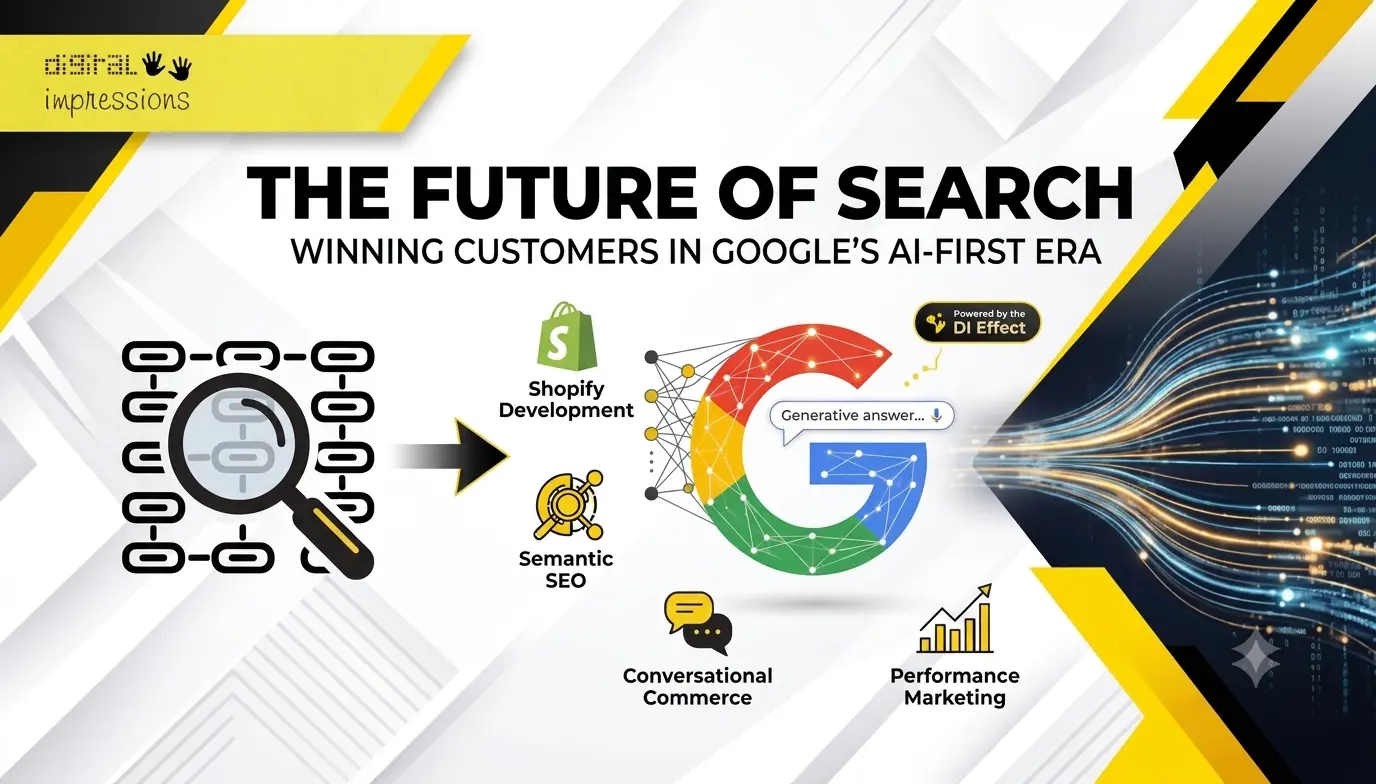
The blue underline is dead. For a quarter of a century, the architectural foundation of the internet relied on a predictable, transactional contract: a user typed a fragmented query into a blank white box, and an engine returned ten static links. Brands fought tooth and nail for the coveted top-three slots, optimising for exact-match keywords and gaming backlink profiles to capture click-through traffic. But as Google’s search ecosystem shifts from an indexing directory into a generative answering engine, the traditional traffic pipeline is fracturing. We are entering an era of “zero-click searches,” where complex consumer journeys are compressed, synthesised, and completely resolved directly within an AI-generated interface before a user ever thinks about clicking through to a website. The corporate boardrooms that continue to fund legacy, analogue SEO frameworks aren’t just losing visibility; they are funding an obsolete map.
This is not the death of search; it is the death of traditional search mechanics. In this new paradigm, visibility isn’t earned by stuffing paragraphs with repetitive phrases or building superficial backlink arrays; it is won by building conceptual authority, structural data precision, and real-world brand sentiment that an AI model can confidently synthesise. The algorithms are no longer evaluating how well you write for a search engine; they are calculating how reliably your ecosystem answers the fragmented, conversational intentions of a human being. In this hyper-accelerated shift, brands that rely on legacy keyword targeting will simply fade into digital invisibility. To survive the evolution, you must learn to optimise for conversational systems, predictive intent, and semantic data clarity. Welcome to the AI-First Era, where you either become the definitive source the model quotes, or you cease to exist on the modern web.
1. The Death of the Ten Blue Links: Mapping the Semantic Shift
To understand why legacy digital optimisation models are collapsing, one must look closely at how modern machine learning models process human thought. Legacy search engines operated on syntactic matching. If a user searched for “best durable embroidered linen curtains for high-ceiling living rooms,” the engine actively scanned the web for pages containing those exact text strings. The brand that deployed that exact phrasing most effectively, paired with high domain authority, usually won the placement.
Google’s AI-first infrastructure abandons literal text matching in favour of deep semantic understanding. Driven by complex multi-modal models, the search framework processes queries contextually, evaluating the underlying intent, situational context, and implicit user needs. The system doesn’t just look for words; it maps the relationships between entities, concepts, and historical consumer actions. When a user asks a complex question today, Google’s AI summarises data from hundreds of disparate sources instantly, generating a single, comprehensive answer right at the top of the viewport.
For e-commerce and corporate entities, this behaviour changes everything. The traditional traffic model assumed a high conversion funnel: impression, click, landing page exploration, and ultimate purchase conversion. In a world where the search engine handles the exploration phase internally, top-of-funnel informational traffic drops drastically. If your digital strategy relies entirely on informational blog posts designed to capture quick, transactional clicks, your acquisition model is exposed to immediate disruption. The market has shifted: search is no longer a path to a website; it is an authoritative workspace where answers are delivered instantly.
2. The DI Engine: Architecting Discovery in an Intelligent World
At Digital Impressions (DI), we anticipated this inflexion point long before it disrupted the wider e-commerce ecosystem. We recognised that surviving an algorithmic shift requires re-engineering how digital platforms communicate with search engines. It’s not just AI; it’s the DI Effect. We don’t just give a prompt; we are prompt. We dismantled old-school search optimisation strategies, replacing them with a highly sophisticated model focused on brand experience, deep schema integration, and contextually responsive conversion frameworks.
Winning in Google’s generative layout requires structured data clarity. If an AI agent cannot instantly crawl, unpack, and verify your product inventory, pricing updates, material attributes, and distribution locations, your business will be excluded from the generated response. At DI, we build advanced technical architectures directly into our bespoke corporate and Shopify e-commerce setups. Our systems inject structured semantic schemas that act as an explicit data map for search crawlers. We ensure that every product variation, technical specification, and brand credential is structured precisely how advanced machine learning systems prefer to consume information. We analyse audience behaviour, trending search terms, and competitor positioning to guarantee your ecosystem remains highly visible when the engine builds its generative answers.
| Optimisation Axis | Traditional Search Model | The DI Augmented Approach (The DI Effect) |
|---|---|---|
| Targeting Focus | Isolated keyword volume, keyword frequency, and density markers. | Entity relationship mapping, conversational intent resolution, and semantic depth. |
| Technical Execution | Basic XML sitemaps, static metadata edits, and standard image alt tags. | Advanced semantic schema deployment, microdata nesting, and dynamic programmatic architectures. |
| Traffic Capture Strategy | High-volume informational clicks routed through long-form landing pages. | Deep conversion-focused optimisation targeting highly qualified, transactional intent queries. |
| E-Commerce Experience | Uniform product listings dependent on external category page sorting. | Contextually personalised front-ends integrated cleanly with programmatic search environments. |
3. Deconstructing Optimisation in the Era of Generative Systems
Optimising for an AI engine requires shifting your focus toward two core elements: entity recognition and informational trust. When Google builds a generative summary, it functions as an editor. It scans the index, filters out low-quality fluff, and references platforms that showcase undeniable domain authority and verified accurate data. If your site contains generalised, shallow content that mimics every other page in your niche, the model has zero reason to cite you.
Modern optimisation requires establishing undeniable expertise. Your content must present original research, unique expert perspectives, and verified factual records. At Digital Impressions, we integrate our performance marketing frameworks with deep search optimisations across major networks including Meta, Google, TikTok, and Snapchat. We create integrated brand signals that tell the algorithm your brand isn’t just a website, but an established authority within your industry footprint.
Furthermore, long-tail query patterns have evolved into full natural conversations. Consumers no longer search using disjointed phrases like “portable geyser Delhi.” Instead, they ask complex, conditional questions: “Which energy-efficient portable instant geyser is safest for a compact apartment bathroom with low water pressure in Rajori Garden?” To capture these highly lucrative conversational streams, your platform’s content architecture must be intentionally built to answer multi-layered situational problems, combining technical parameters with clear, human contextual relevance.
4. Why Human Creative Direction Dictates Modern Conversion
As generative search engines assume the burden of sorting information, a critical paradox emerges: the more content that gets generated by automated algorithms, the more users crave distinct, human perspectives. When every search engine output looks like a uniform block of text, the brand that presents an authentic voice, a striking visual perspective, and genuine narrative depth captures consumer loyalty instantly.
An algorithm can accurately analyse search volume and summarise basic product descriptions. What it cannot execute is authentic brand curation. It cannot explain the distinct tactile quality of a slub linen fabric, the intentional precision of a geometric embroidery pattern, or the lifestyle promise that makes a luxury home product desirable. The structural mechanics of data transmission can be automated, but the emotional logic that drives commerce remains entirely human.
At Digital Impressions, our creative design teams work directly alongside our analytical engineers. We ensure that while your backend systems are perfectly optimised for AI extraction, your public user experience remains visually stunning, intuitive, and deeply moving. We craft distinctive identities and conversion-focused assets that resonate powerfully across competitive international hubs like New Delhi, Dubai, Riyadh, and Doha. By pairing strict technical precision with human-centric creative execution, we turn automated search impressions into lasting business partnerships.
5. The True Operational Cost of Lagging Behind
The operational divide between future-ready businesses and legacy teams is reaching an extreme point. Brands stuck in traditional optimisation loops are pouring capital into resources that are rapidly losing their ability to convert. They spend weeks crafting basic, volume-focused blog content that automated search features synthesise instantly for the end user, rendering the original page unclicked and unvisited.
Conversely, a brand built around an augmented digital framework operates with minimal drag. Because their structured product records are cleanly mapped for artificial intelligence models, they are naturally highlighted in generative product recommendations and local map summaries. Their human marketing teams spend zero time managing messy data alignment or updating basic inventory text. Instead, they focus entirely on maximising media acquisition efficiency, building key creative hooks, and scaling operational margins. The penalty for neglecting this technological shift isn’t just lower search rankings- it’s complete loss of access to your market audience.
6. Mastering the AI-First Era: An Actionable Framework
Reorienting your digital ecosystem to lead the future of intelligent search requires making fundamental changes to your digital workflow. To insulate your digital revenue streams from sudden algorithmic disruption, implement this operational blueprint immediately:
Reconstruct Your Site’s Schema Architecture: Transition beyond basic optimisation tags. Implement comprehensive semantic schema graphs across your entire product inventory, tracking every technical specification, verified user review, and company profile detail.
Optimise for Conversational Search Intent: Audit your content strategy to ensure your brand provides direct solutions for complex, conditional user queries. Focus heavily on answering deep, specific situational concerns that simple automated lookups cannot adequately resolve.
Build a Resilient Multi-Channel Discovery Engine: Do not let your brand depend on a single traffic acquisition pipeline. Bridge your deep technical optimisations with targeted performance marketing across diverse visual networks like Meta, TikTok, and Google Performance Max, maintaining multiple avenues of brand discovery.
The rules governing digital discovery are changing in real time. The era of winning customers through simple, keyword-stuffed formulas is gone, replaced by a sophisticated space driven by context, semantic data structure, and absolute authoritative trust. As the search landscape completes this transformation, you face a distinct choice: do you continue running your brand on legacy frameworks, or do you step forward with a partner that builds for the future?
Examine your current site analytics, look at your organic acquisition lines, and test your key products inside generative search environments. Is your platform positioned to be the authoritative answer the system highlights, or are you paying for basic, legacy tactics that disappear beneath the generative answer window? If your brand is not winning the discovery race, let’s change your digital footprint. Contact Digital Impressions today, and let’s deploy the DI Effect to dominate the next generation of digital commerce.
As the intelligent web evolves to summarise the world’s information, a definitive line has been drawn in the digital sand: Will your platform be the authoritative source that the AI confidently relies on to answer the customer, or will your business be completely hidden behind the answer itself?
You might also like
The Impressions Edit – September ’26
Expert Insights: How AI Is Changing E-commerce Marketing
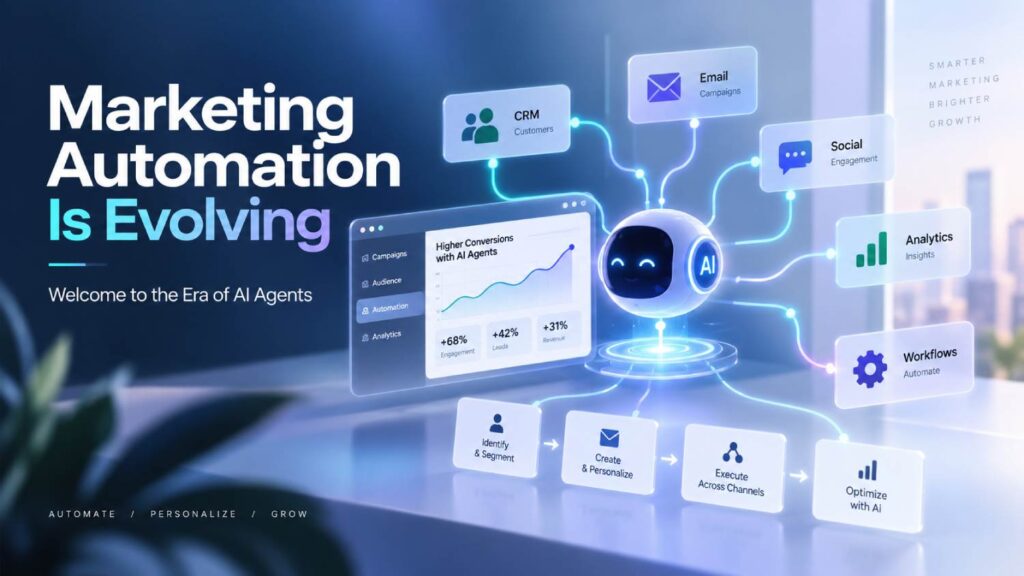
Marketing Automation Is Evolving: Welcome to the Era of AI Agents


Let’s chat...
AS SEEN ON









awards

Excellence
in Digital Marketing
Women CPO
of the year 2023
Transformational
Leaders to Watch
Most Trusted
Companies


-

INDIA
NCR
+91-9811348433 Digital Impressions (INDIA)
29-36 LGF, Charmwood Plaza,
Delhi NCR - 121009
India
-

INDIA
GURUGRAM
+91-9811348433 Digital Impressions (INDIA)
4th Floor, JMD MEGAPOLIS, FF-402,
Badshahpur Sohna Rd, Sector 48,
Gurugram, Haryana 122018
India
-

USA
ATLANTA, GEORGIA
Digital Impressions (USA)
1445 Woodmont Ln NW,
4515 Atlanta Georgia - 30318
United States
-

UAE
DUBAI, UAE
+971-545502300 Digital Impressions (FZCO)
72819, IFZA Business Park, A1
Dubai Silicon Oasis - 342001
UAE


